
Rio Rancho, NM · Garage Door Service
Garage Door Care That Actually Fits Rio Rancho's Climate and Housing Stock
See how Rio Rancho's cold winters and 1968-1999 housing stock affect garage door springs, cables, and openers, and what seasonal care actually prevents failures here.
- Repairs & new doors
- Springs & openers
- Serving 4 nearby communities
Season by Season
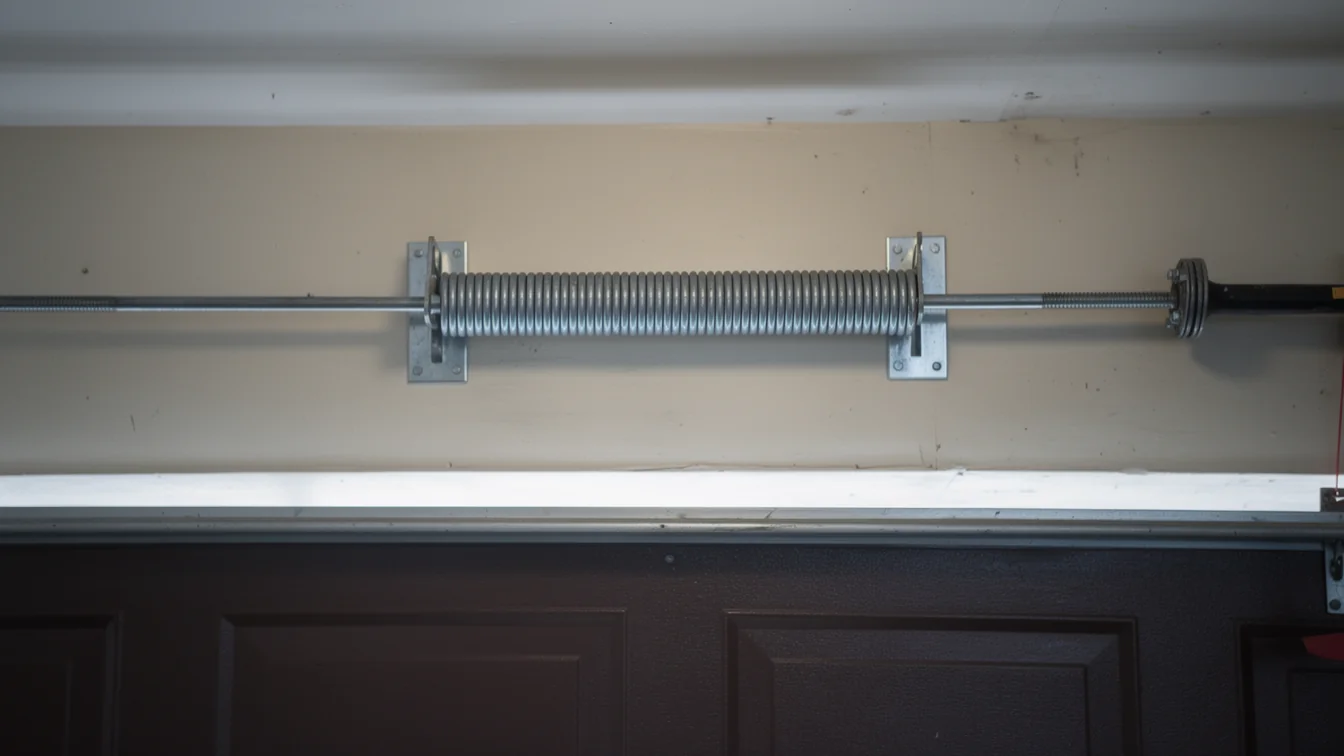
Rio Rancho sits in a COLD-severe climate band, where the ground freezes and thaws through the winter rather than holding at one temperature. That repeated freeze-thaw is what actually works on a torsion spring's coating and a track's bolts - not one cold night, but weeks of expansion and contraction. Late fall is when we see the first wave of calls: a spring that was already fatigued finally lets go once the morning temperature drops hard enough to stiffen the lubricant inside the coils.
Winter itself brings slower, heavier openers. Gear-reduction units especially bog down as grease thickens, and a door that used to rise in six seconds starts taking nine or ten. That's not damage yet, it's a warning.
Spring is when expansion cracks in old weatherstripping and dried-out rollers show up, usually as noise rather than failure. Summer heat, by contrast, is harder on the opener's circuit board and on vinyl rollers than on the spring system - plastic and rubber parts age faster under direct sun than steel does in a severe-cold band like this one. None of these are separate problems. They're the same hardware responding to the same yearly cycle, just at different points in it.
What Local Conditions Do
Most of the doors we work on in this area date back to houses built between 1968 and 1999, with the median landing around 1981, and the stock skews heavily toward 1980s and 90s construction across the ten named areas we track locally. That build window matters because torsion hardware, track gauge, and opener mounting changed more than once over those three decades - a part that fits a 1972 door often doesn't fit a 1994 one, even on the same street.
Neighborhoods like Enchanted Hills and Lomas Encantadas, both roughly 7 miles ENE, and closer-in areas like Northern Meadows and Rivers Edge, largely share that same 1980s-90s build era, so the same hardware quirks repeat house to house rather than being one-off problems. A severe-cold winter cycle hitting a 40-year-old torsion spring is a very different repair than the same winter hitting a 15-year-old one, even though both owners describe the same symptom: a door that won't lift.
We don't have manufacturer-specific records for every house, so we're not going to tell you your exact opener model without looking at it. What the age and climate data do tell us is which failure modes to expect first on a visit.
What Most People Get Wrong
The biggest mistake we see is treating a slow-rising door as an opener problem when it's a spring problem, or the reverse. Across the roughly 30,505 households this area covers, about 20,276 are owner-occupied houses, and a lot of those owners have never had anyone open the opener housing to look at the actual coil. A stiff cold-weather drag on the door gets blamed on the motor because that's the part making noise, when the spring is doing most of the real work and just failing quietly.
The second mistake is price-shopping a repair without knowing the hardware era. With median household income here at $65,432, most owners are reasonably careful about spending, and that's fair - but a repair quoted without knowing whether the door is on 1970s-era hardware or a 1990s retrofit can be off in either direction. Older torsion setups sometimes need parts that aren't on a standard truck stock, which is an honest limitation: we don't carry every obsolete wind-coil size, and sourcing one can add a day to the job. That's not a convenient excuse, it's just how parts availability works on doors built before the mid-90s standardization.
What Is Going On
Put the pieces together and the pattern is pretty simple. You've got a severe-cold climate band doing freeze-thaw damage every winter, layered on top of a housing stock where most doors were installed sometime in that 1968-1999 window with a median around 1981. That combination means the hardware is old enough to be fatigued and the climate is harsh enough to be the thing that finally breaks it.
It also means two houses that look identical from the street - same decade, same neighborhood, maybe even the same builder - can be due for completely different repairs depending on whether a previous owner ever replaced the spring or opener. We see this constantly in the closer-in areas like Chamiza Estates and La Barranca, a few miles east of the core, where the build era is consistent but maintenance history clearly isn't.
There's no single fix that covers all of it, which is why a seasonal check matters more here than a one-time repair. If you want more on how we handle calls across the area, the home page has that.
Frequently asked questions
Why does my garage door get slow every winter?
In a severe-cold climate band like this one, grease inside the opener and inside the torsion spring thickens as temperatures drop, and the steel coil itself contracts slightly. On a door from the 1968-1999 build era, that stiffening is often the first sign a spring is already fatigued, not a brand-new problem - the cold just exposes it.
Does the age of my neighborhood matter for repairs?
Yes. Most houses across this service area went up between 1968 and 1999, with a lot of neighborhoods concentrated in 1980s-90s construction. Hardware specs changed across that span, so a technician needs to know the build era before quoting a spring or track repair, since parts from different decades aren't always interchangeable.
Can you always get parts same-day for an older door?
Not always. Doors from the earlier end of the 1968-1999 range sometimes used torsion spring wind sizes that aren't standard truck stock anymore, and sourcing one can add a day to the job. We'd rather tell you that upfront than promise a same-day fix we can't back up.
Related garage door services in Rio Rancho
More garage door guides
Book garage door service in Rio Rancho
Call now or request a quote - tell us what the door is doing and where you are.