
Rio Rancho, NM · Garage Door Service
What We Actually Check on a Rio Rancho Service Call
A breakdown of what our techs check on a Rio Rancho service call, tied to the 1968-1999 housing stock and the area's cold winters.
- Repairs & new doors
- Springs & openers
- Serving 4 nearby communities
Season by Season
Rio Rancho winters bring hard freezes that stiffen torsion springs and thicken old grease on tracks and rollers, so a winter call usually starts with a spring tension check and a look at how the door balances when it's cold. Most of the houses we work on here went up between 1968 and 1999, with the bulk from the 1980s and 90s, which means original hardware is now 25 to 55 years old and has been through decades of that freeze-thaw cycle. Spring and fall bring wide temperature swings between morning and afternoon, and that swing is what cracks dried-out weatherstripping and loosens track bolts that were torqued down in a different decade. Summer heat expands wood jambs and metal track mounts, which is often when a door that's been slightly out of adjustment all year finally starts binding. We don't treat every season the same, because the stress on a door built in 1985 responds differently to a January cold snap than it does to an August afternoon, and the service call reflects that.
What Local Conditions Do
Cold-climate stress is the main driver of what breaks on doors across this service area, covering roughly 30,505 households and about 20,276 owner-occupied houses, many sitting on original hardware from the 1980s and 90s build-out. Steel torsion springs lose a measurable amount of lifting force in sustained cold, and on an older door that's already near the end of its cycle count, that's often the difference between a door that opens fine and one that won't budge on a 20-degree morning. Nylon rollers from that era get brittle rather than just worn, and cold makes the cracking worse before it makes it visible. In areas like Enchanted Hills, Ventana Ranch, and the neighborhoods closer to the North Valley side, we see the same pattern: original opener motors straining harder in cold weather because the gear sets were never rated for the duty cycle a 30-plus-year-old door now demands of them. None of this is dramatic. It's slow wear that cold weather exposes faster than a mild climate would.
What Most People Get Wrong
The most common mistake we see on a service call is someone replacing an opener because the door seemed slow or noisy, when the actual problem was a spring that had lost tension from age and cold exposure. On a house built in the 1980s or 90s, the spring has likely never been replaced, and a tired spring makes the opener work harder, which people read as an opener problem. The second mistake is assuming a sticking door needs new tracks when it's really a bent bracket or loose lag bolts, which is a much shorter job. We also get calls where someone has already oiled the chain or belt with the wrong lubricant, which attracts grit and makes the noise worse rather than better. None of this is about homeowners being careless. It's that a door's symptoms rarely point straight at the actual part, and 30-plus-year-old hardware has more failure points than the newer doors most troubleshooting advice online assumes you're working on.
What Is Going On
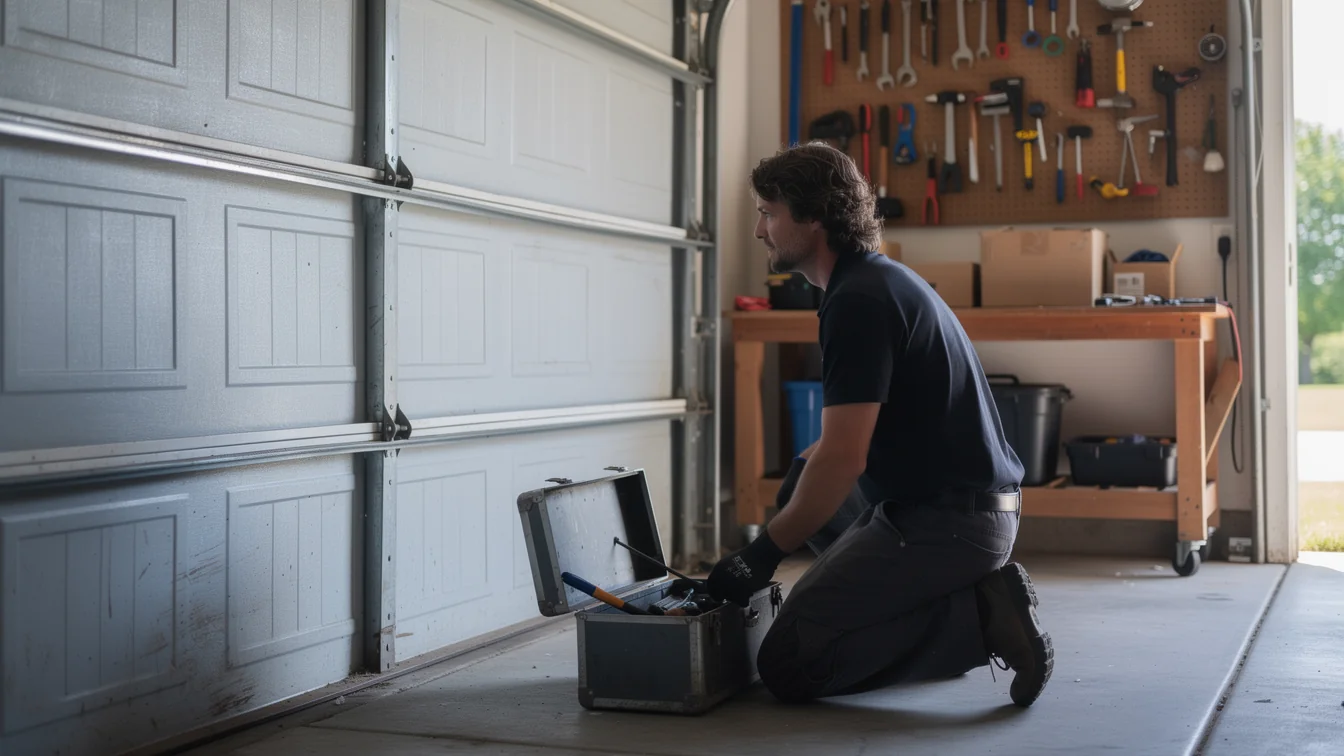
A service call here starts with checking the spring's wind and tension against what the door's weight actually needs, since original springs on houses from this build era were sized for doors that may have since been replaced or re-weighted. We check the track alignment, the roller condition, and whether the opener's force settings still match the door or were just left at factory default decades ago. We also check the weatherstripping and bottom seal, since the sun and cold cycle in this area breaks down rubber faster than people expect over a 25- to 40-year span. One honest limitation: if the door is original to a 1970s or early-80s build and several major components are failing at once, we'll tell you straight that patching one part isn't worth it, and point you toward what replacement actually costs instead of running up a repair bill on hardware that's past its working life.
Frequently asked questions
How old is the hardware on a typical Rio Rancho garage door?
Most houses in this service area were built between 1968 and 1999, with the heaviest concentration in the 1980s and 90s. That means a lot of original springs, tracks, and openers are now 25 to 55 years old, which is well past the expected working life of most of those parts.
Does cold weather really affect garage door springs?
Yes. Torsion springs lose measurable lifting force in sustained cold, and on a 30-plus-year-old spring that's already near the end of its cycle count, a hard freeze can be the final push that causes it to break rather than just feel stiff.
Is it worth repairing an original door from the 1980s?
Sometimes, sometimes not. If one part has failed and the rest of the door is sound, repair makes sense. If several original components are wearing out together, we'll tell you plainly when replacement is the better value instead of running up repair costs on old hardware.
Related garage door services in Rio Rancho
More garage door guides
Book garage door service in Rio Rancho
Call now or request a quote - tell us what the door is doing and where you are.